AT&T Takes Texting and Driving Simulator to KY
AT&T has been taking the Texting While Driving Simulator all across the US and its latest stop was is Hardin County in Kentucky. The event was featured in the News-Enterprise in Hardin County late last month while working with the local high school by Kelly Cantrall.
The full article is located below:
Students learn texting and driving isn’t easy
The crash had a distinct sound, like scraping metal, screeching tires and breaking glass. It repeated, over and over, as student after student settled into the driver’s seat only to climb back out minutes later after they had run off the road, hit a car or ran into a pedestrian crossing the street.
Fortunately, this wasn’t driver’s ed.
North Hardin High School hosted a texting and driving simulator from AT&T on Wednesday to highlight to some of its seniors how dangerous sending a message can be while maneuvering a car.
The simulator is part of the company’s “It Can Wait” campaign, which intends to raise awareness of the dangers of texting while driving. Sept. 19 is planned to be a national day of action for the campaign.
The company is taking simulators around the country to reach teenage drivers, the targeted audience for the campaign, said Hank Mangeot, an AT&T regional manager. The company contacted Hardin County Schools about bringing one to the county.
“We’re working communities large and small,” Mangeot said.
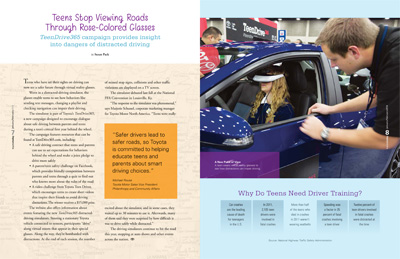
Teens fill out a pre-survey to determine their feelings about texting and driving, and then get into a car and put on goggles that allowed them to see a virtual road complete with other drivers and pedestrians, said Paulos Frezghi, one of the simulator operators. Students are given a message to text while trying to navigate the course. They complete another survey after driving in the simulator.
Mangeot said he thinks students leave with a better understanding of what can happen when they text and drive, from their own mistakes to not being able to react to the other drivers and pedestrians.
“They get out and are like, ‘Wow, I had no idea,’” he said.
The simulator doesn’t shy away from showing the effects of the errors, from the drivers’ own deadly crashes to the damage they can cause to others.
Seniors Eric Callens and Scott Sterusky both eventually crashed while driving the simulator.
“It just makes a big ol’ crash and that means you died,” Sterusky said of the simulator.
Both agreed it was very difficult to drive the car while trying to complete the messages they were supposed to send.
Senior Kierra Priest ran into a pedestrian during her turn in the driver’s seat.
“I didn’t crash,” she said to the crowd of students, who were enthusiastically shouting out directions before her accident, “I just killed somebody.”
Priest said the simulator was different than she expected, but she thought she had been doing well until the virtual pedestrian crossed her path.
“It wasn’t hard, per se, until the person popped up,” she said. She considered the experience some more.
“I guess it was kind of hard,” she added.
Kelly Cantrall can be reached at (270) 505-1747 or [email protected].


 The PEERS Foundation is proud to announce our partnership with Toyota and Toyota’s TEEN Drive 365 initiative